What Is a Payment Authorization Rate (and Why It Matters)
Learn what payment authorization rates are, how they are calculated, and why approval performance is one of the most important metrics in modern card payment infrastructure.

In card payments, every purchase request triggers a real-time authorization decision by the issuing bank. The bank determines whether the transaction should be approved or declined before the payment can proceed.
Some transactions are approved and completed successfully, while others are declined during the authorization stage.
The payment authorization rate measures how often those transactions succeed.
For payment providers, acquirers, and merchants, it is one of the most important operational metrics in the payments ecosystem because it directly determines how much attempted revenue actually converts into completed payments.
This article explains what authorization rates are, how they are calculated, why they vary across payment systems, and how payment infrastructure influences approval outcomes.
Definition: Payment Authorization Rate
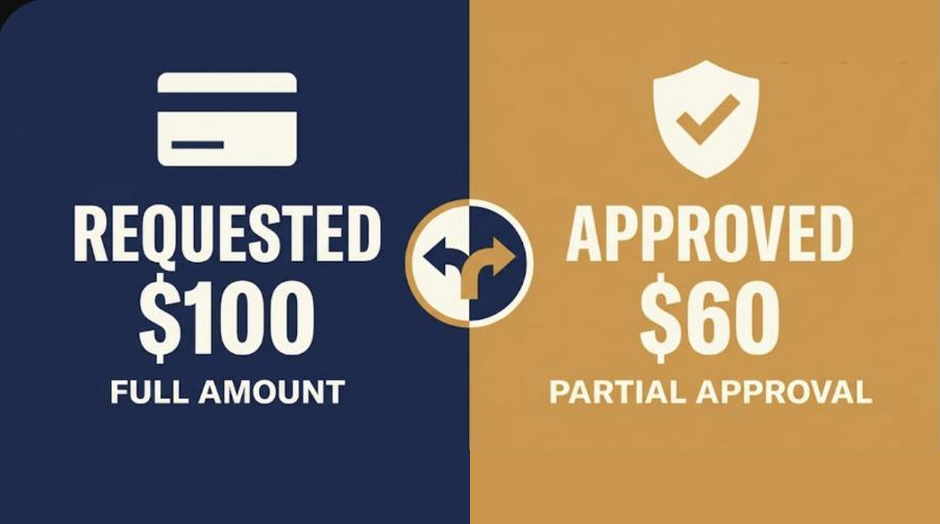
A payment authorization rate (also called an approval rate or auth rate) is the percentage of payment transactions that are approved by the issuing bank out of the total number of attempted transactions.
It is calculated as:
Authorization Rate = Approved Transactions ÷ Total Attempted Transactions
If a business attempts 1,000 payments and 920 are approved, the authorization rate is 92%.
Authorization rate measures how effectively a payment system converts customer payment attempts into successful transactions.
Even small improvements in authorization rate can significantly increase revenue because every decline represents a potential sale that did not complete, as explained in PayPal’s guide to optimizing authorization rates.
Where Authorization Rates Appear in the Payment Flow
Authorization rates originate in the card authorization process, which occurs when a merchant sends a transaction request through the payment infrastructure to the issuing bank.
A typical authorization path looks like this:
Customer → Merchant → Payment Gateway → Acquirer → Card Network → Issuer
The issuing bank evaluates the request and returns an approval or decline response, typically within milliseconds, as described in Mastercard’s Decision Intelligence documentation.
Each attempted payment contributes to a merchant’s authorization statistics.
OutcomeEffect on Authorization RateApprovedImproves authorization rateDeclinedLowers authorization rateBlocked by merchantNot submitted for authorization
Because authorization rates depend on issuer decisions, they reflect both bank risk models and payment infrastructure quality.
Typical Authorization Rates in Card Payments
Authorization performance varies widely depending on industry, region, and transaction type.
For e-commerce businesses, authorization rates commonly fall between 85% and 95%, according to Stripe’s guide to improving authorization rates and PayPal’s merchant payment optimization resources.
Several factors influence these numbers:
- card-not-present vs in-person payments
- issuer fraud models
- transaction data quality
- cross-border transactions
- payment method type
Online transactions often have lower approval rates than in-person payments because issuers receive fewer signals confirming transaction legitimacy, a trend discussed in Razorpay’s technical analysis of authorization declines.
Why Authorization Rates Matter
Authorization rates directly affect merchant revenue performance.
When a transaction fails at authorization:
- the merchant loses a potential sale
- the customer experiences checkout friction
- payment providers lose transaction volume
Because of this, authorization rate is widely considered a core payment performance indicator for digital businesses, as explained in PaymentsJournal’s analysis of authorization rates.
For high-volume merchants or subscription platforms, even a 1-2% improvement in authorization rate can translate into significant additional revenue, according to Stripe’s payment performance research.
How Issuers Decide Whether to Approve a Transaction
Authorization rates ultimately depend on how issuing banks evaluate payment requests.
When an authorization request arrives, issuer systems run automated decision models that analyze:
- cardholder spending history
- transaction patterns and velocity
- account balance or credit limit
- merchant reputation
- fraud risk signals
These decisions typically occur within milliseconds, using rules engines and machine learning models designed to detect fraudulent or risky transactions, as detailed in Mastercard’s Decision Intelligence playbook.
Issuers aim to balance two competing goals:
- preventing fraud
- approving legitimate transactions
Because these models operate under uncertainty, legitimate payments can sometimes be declined even when funds are available.
Issuer Declines vs Network Declines
Not all payment declines originate from the same source.
In card payments, declines generally fall into two categories: issuer declines and network or processing declines.
Decline TypeDescriptionIssuer DeclineThe issuing bank rejects the transaction due to risk, insufficient funds, or card restrictionsNetwork DeclineThe transaction fails due to routing, configuration, or data errors
Issuer declines typically occur because of:
- insufficient funds
- fraud risk scoring
- card limits or restrictions
- unusual spending patterns
Network declines occur when the payment request fails before reaching a valid authorization decision. These can result from routing issues, incomplete transaction data, or gateway errors, as described in Razorpay’s payment authorization decline guide.
Understanding the difference is important because the two decline types require different optimization strategies.
Why Authorization Rates Vary Across Payment Systems
Authorization rates are influenced by multiple layers of payment infrastructure.
Issuer Risk Models
Issuing banks continuously adjust fraud detection systems to prevent unauthorized card use.
Advanced decisioning systems evaluate risk scores to determine whether transactions should be approved.
Transaction Data Quality
The information included in the authorization request affects issuer confidence.
Providing richer context - including device signals, authentication results, and customer history - can improve issuer visibility and increase approval probability, as explained in Signifyd’s research on merchant and issuer transaction data.
Payment Infrastructure
Authorization performance is also influenced by how transactions are routed through payment systems.
Factors include:
- gateway configuration
- acquiring bank relationships
- network routing
- retry strategies
Large payment platforms often use multiple infrastructure layers to improve authorization outcomes.
How Payment Providers Improve Authorization Rates
Payment providers and merchants deploy multiple strategies to improve authorization performance.
Improve Transaction Data
Sending richer transaction data helps issuers make better risk decisions.
Smart Payment Routing
Some payment systems dynamically route transactions across multiple acquiring banks to maximize approval probability.
Authentication Signals
Strong authentication signals such as 3D Secure can increase issuer confidence, as explained in Stripe’s technical guide to 3D Secure 2.
Intelligent Retry Strategies
Some declined transactions can succeed when retried at a different time or through a different payment path.
Modern payment infrastructure increasingly uses data-driven retry strategies to recover otherwise lost transactions.
Authorization Rate vs Decline Rate
Authorization rate and decline rate measure opposite outcomes.
MetricDefinitionAuthorization RatePercentage of approved transactionsDecline RatePercentage of rejected transactions
For example:
- 95 approvals out of 100 attempts = 95% authorization rate
- 5 declines out of 100 attempts = 5% decline rate
Monitoring both metrics helps payment organizations identify inefficiencies in their payment flows.
Authorization as a Payments Infrastructure Problem
Authorization performance is often misunderstood as purely an issuer decision.
In reality, authorization outcomes emerge from the interaction of multiple payment systems, including merchant data quality, network routing, and issuer risk models.
Because of this, improving authorization performance increasingly involves infrastructure-level optimization rather than simple retry strategies.
This includes improving:
- transaction signals
- routing logic
- authorization data quality
- recovery capabilities across the payment stack
Where Better Fits
Better operates as real-time payment recovery infrastructure designed to address recoverable payment failures during the authorization lifecycle.
Rather than replacing payment processors, acquirers, or card networks, Better integrates with existing payment infrastructure to identify authorization failures that can still be recovered and convert them into successful transactions.
This infrastructure layer focuses specifically on the point where revenue is most often lost - failed payment authorizations that could have succeeded under different conditions.
The Operational Takeaway
Authorization rate is one of the most important performance indicators in card payments.
It measures how effectively the payment ecosystem converts customer payment attempts into successful transactions.
Because issuer decisioning occurs in real time and depends on many interacting systems, authorization outcomes reflect the entire payment stack - from merchant data quality to bank risk models.
Organizations that understand and optimize authorization performance are better positioned to:
- maximize payment success
- reduce unnecessary declines
- improve customer checkout experiences
- capture revenue that would otherwise be lost
Key Terms
Payment Authorization Rate
The percentage of attempted card transactions approved by issuing banks.
Issuer Decline
A transaction rejected by the cardholder’s bank.
Network Decline
A transaction failure caused by infrastructure or processing errors.
Authorization Optimization
Techniques used by payment providers to increase transaction approval rates.